

Meet the Crew: The People Behind the Space Test Center
Building the Future of Propulsion Testing: From Durango to Tulsa
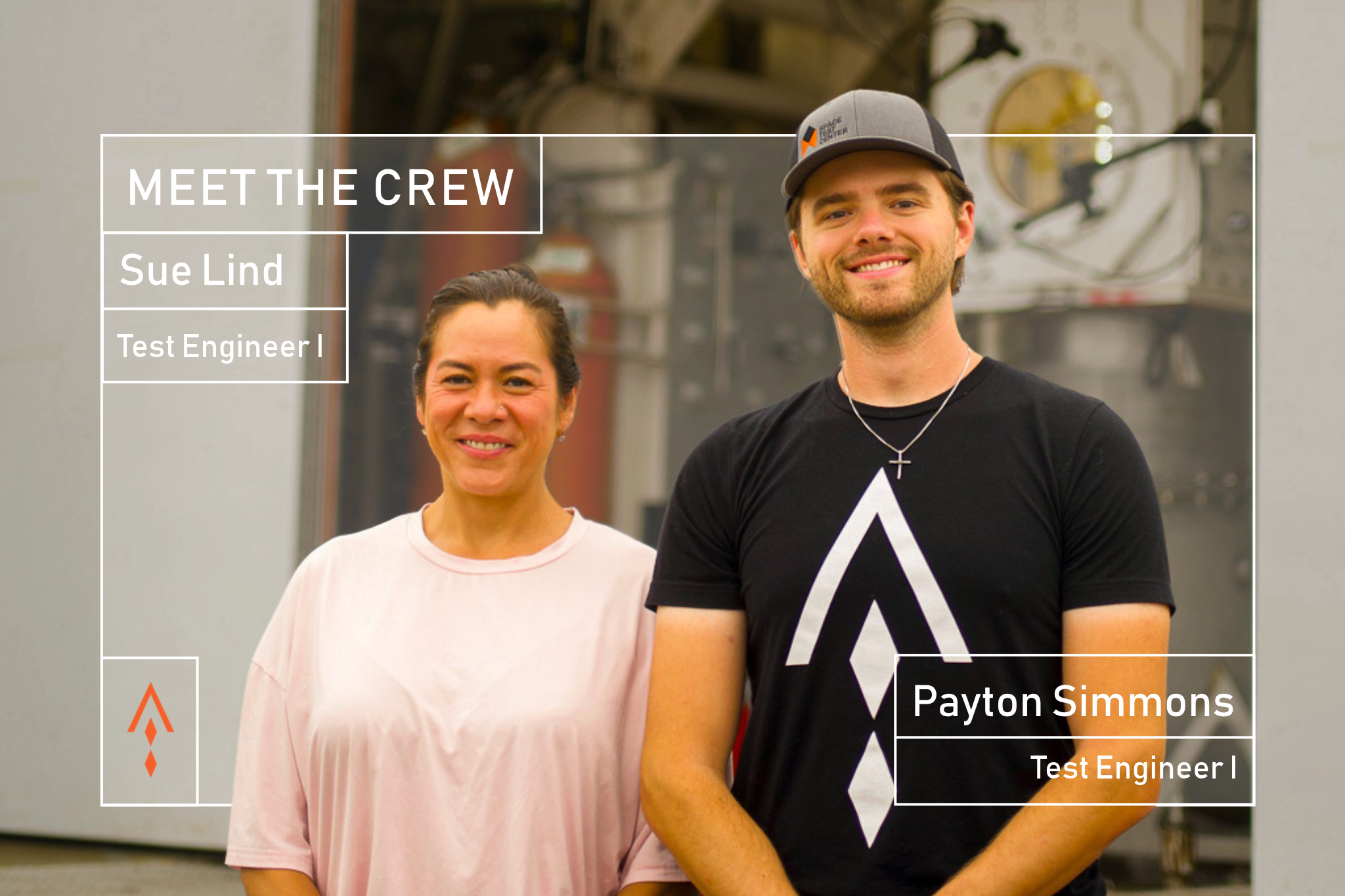
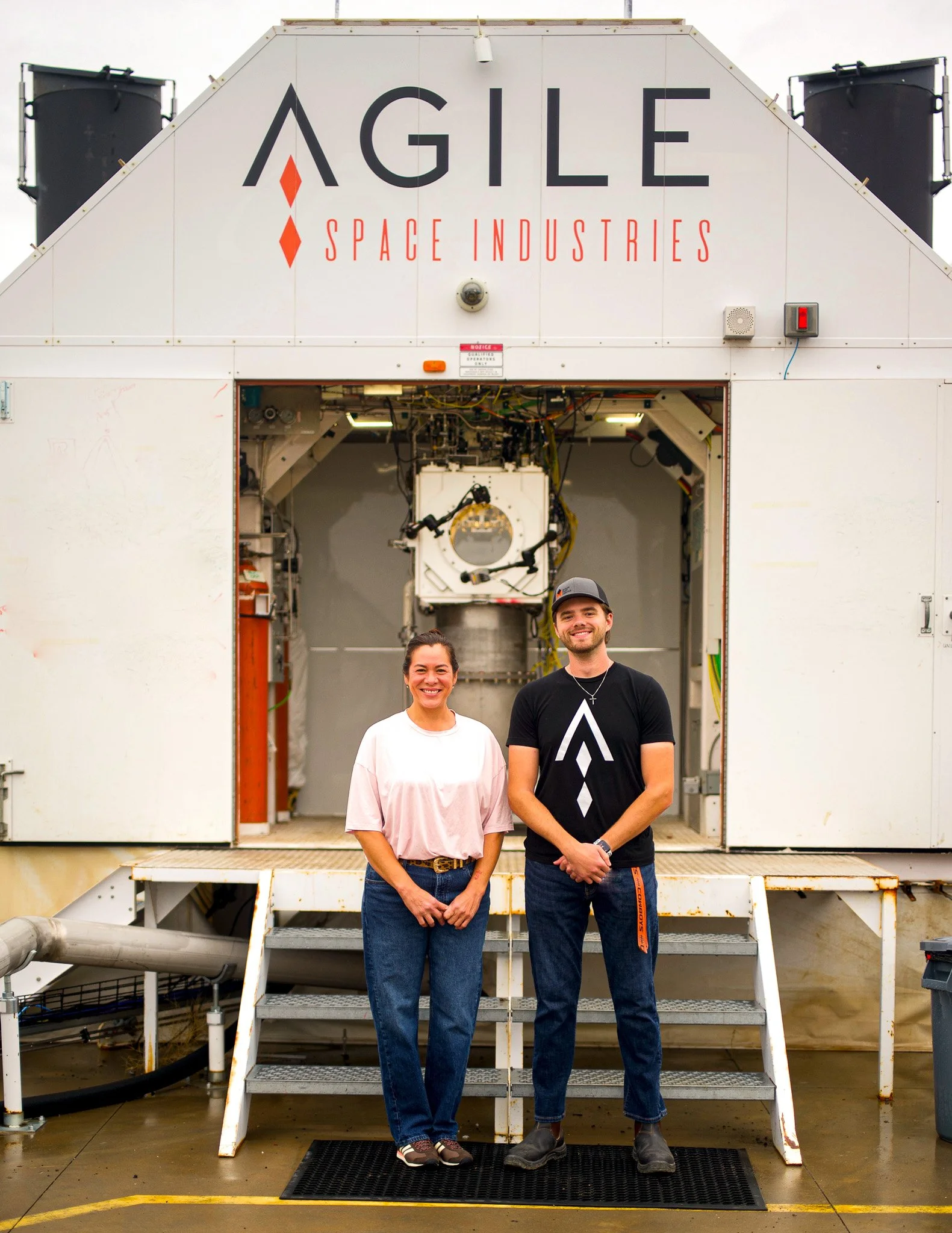
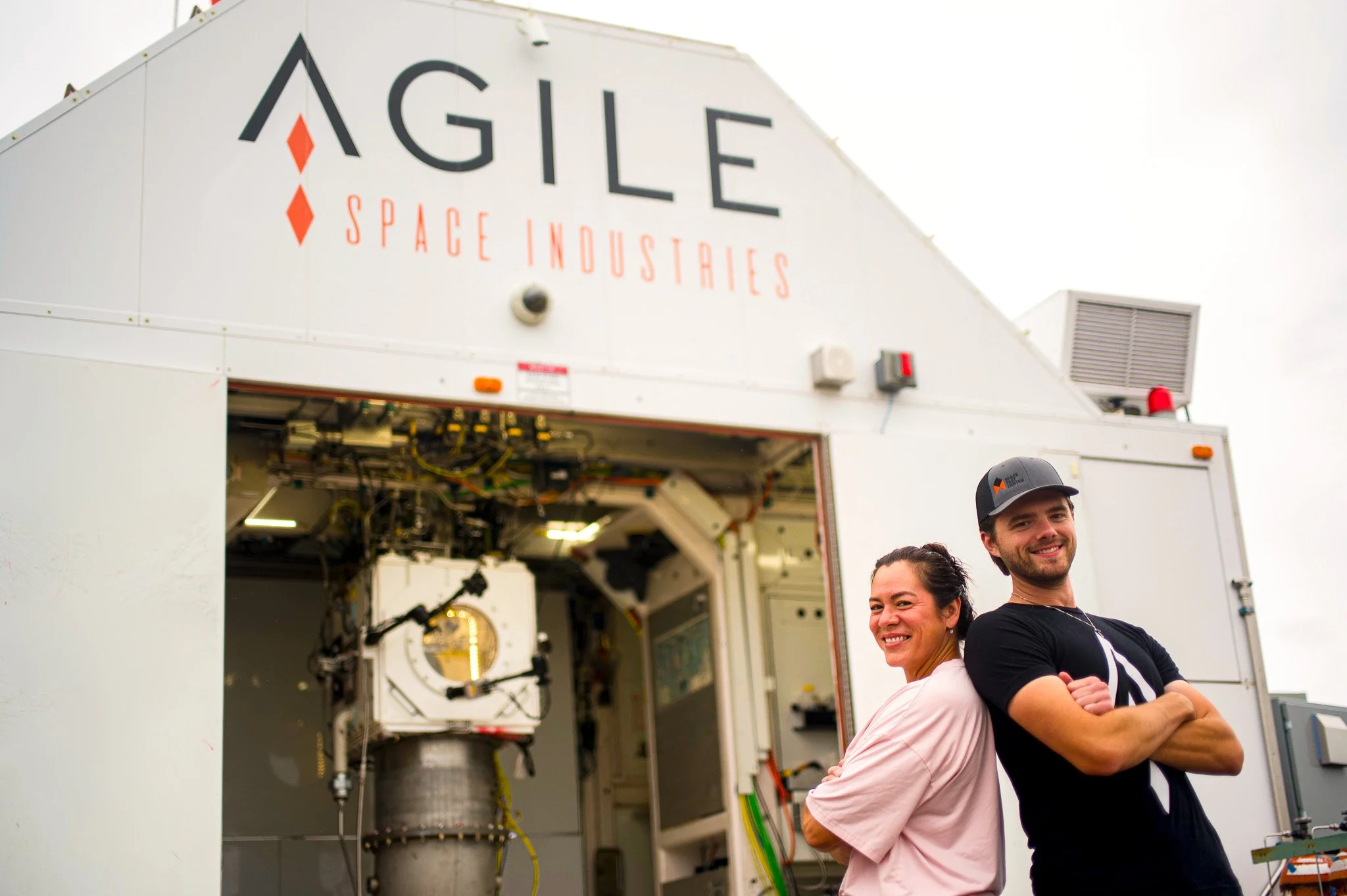
Before Agile Space Industries’ Space Test Center (STC) begins operations in Tulsa, Oklahoma, Test Engineers Sue Lind and Payton Simmons are dedicating approximately a year to working alongside Agile’s established test team in Durango, Colorado.
The extended assignment is an intentional part of preparing the team that will help stand up and operate STC. Through their work in Durango, Sue and Payton are building on their technical backgrounds with hands-on experience across Agile’s test systems, processes, and day-to-day propulsion operations.
When they return to Tulsa, they’ll bring that experience with them as members of STC’s first operating team, helping establish the new center from the ground up.
Building on Agile’s Testing Experience
STC is being developed in Tulsa to expand propulsion testing capacity and provide infrastructure for testing in-space rocket engines under simulated space conditions.
While the physical facility takes shape, Sue and Payton are getting an opportunity to work inside Agile’s existing testing operations in Durango. Their time there is about more than learning procedures. They are working directly with Agile’s test systems and alongside experienced colleagues, deepening their understanding of how years of propulsion testing knowledge translate into everyday decisions.
Their paths to Durango, however, are very different.
Sue’s path to test engineering began with a strong interest in physics and experimental research. She earned her Bachelor of Science in physics from Northeastern State University, where she researched phase-change materials to improve thermal protection in firefighter gear. Through collaborative research with the University of Oklahoma, she also explored atomic, molecular and optical (AMO) physics, using computational methods to model atomic systems and conducting experiments involving twin beams generated in sodium vapor. These experiences strengthened her ability to work with complex experimental systems, troubleshoot hardware, analyze data and understand how systems behave. That combination of scientific curiosity and hands-on problem-solving ultimately drew her to test engineering.
Payton knew early on that he wanted to build a career in space, though his path into test engineering took shape over time. He studied aerospace engineering at Oklahoma State University before earning a master's degree in space systems from Florida Tech, where his work with electric propulsion introduced him to the challenges of propulsion testing. That experience helped shape his interest in the hands-on engineering required to evaluate propulsion systems and understand how they perform. When Agile began developing STC, Payton saw an opportunity to apply his technical background while helping establish a new propulsion testing capability in the community where he grew up.
Learning by Doing
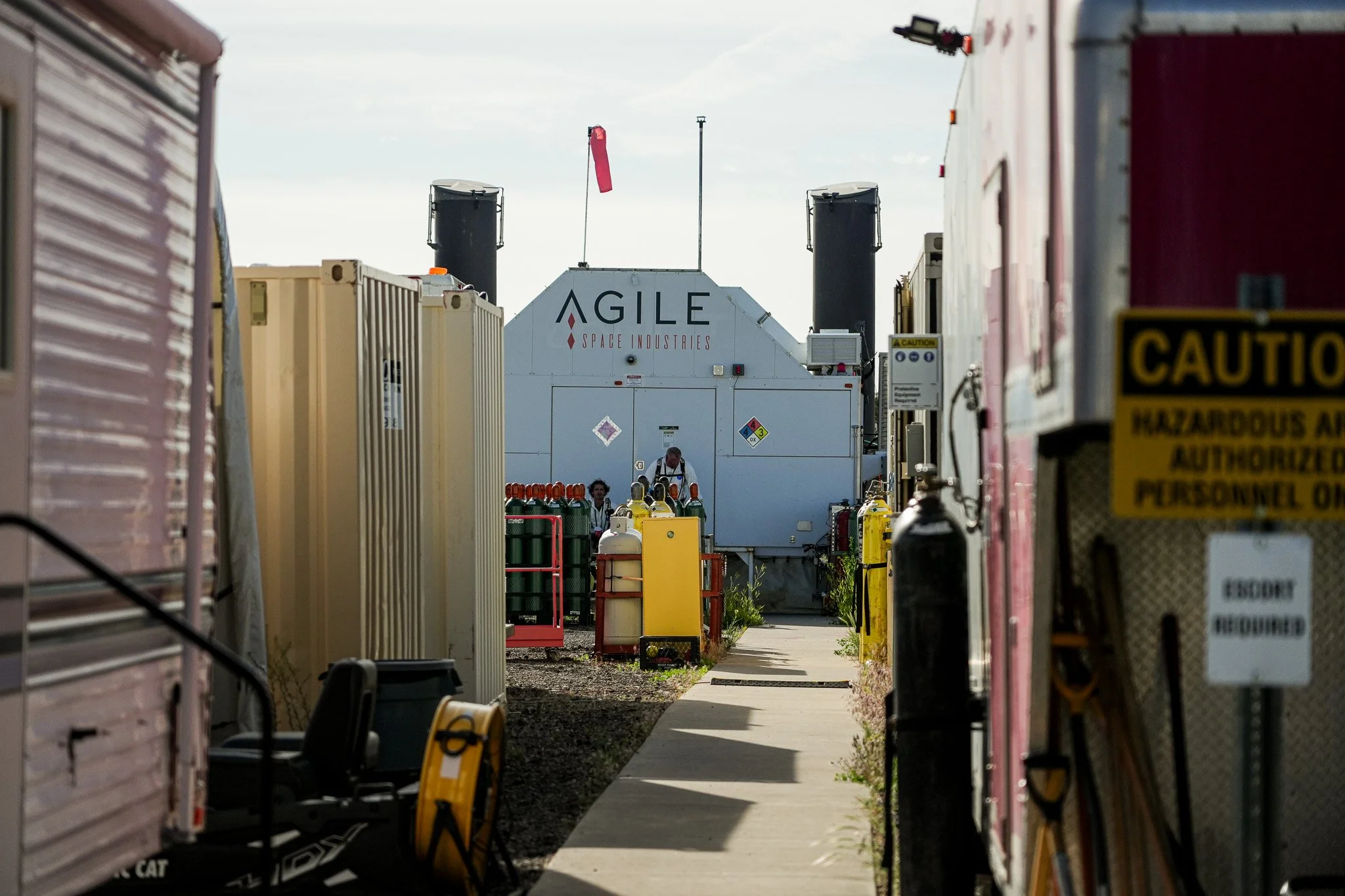
For Sue and Payton, working alongside the Durango test team has provided a close-up look at how one of the nation’s leading hot-fire testing facilities operates — and what it takes to support fast-moving propulsion programs.
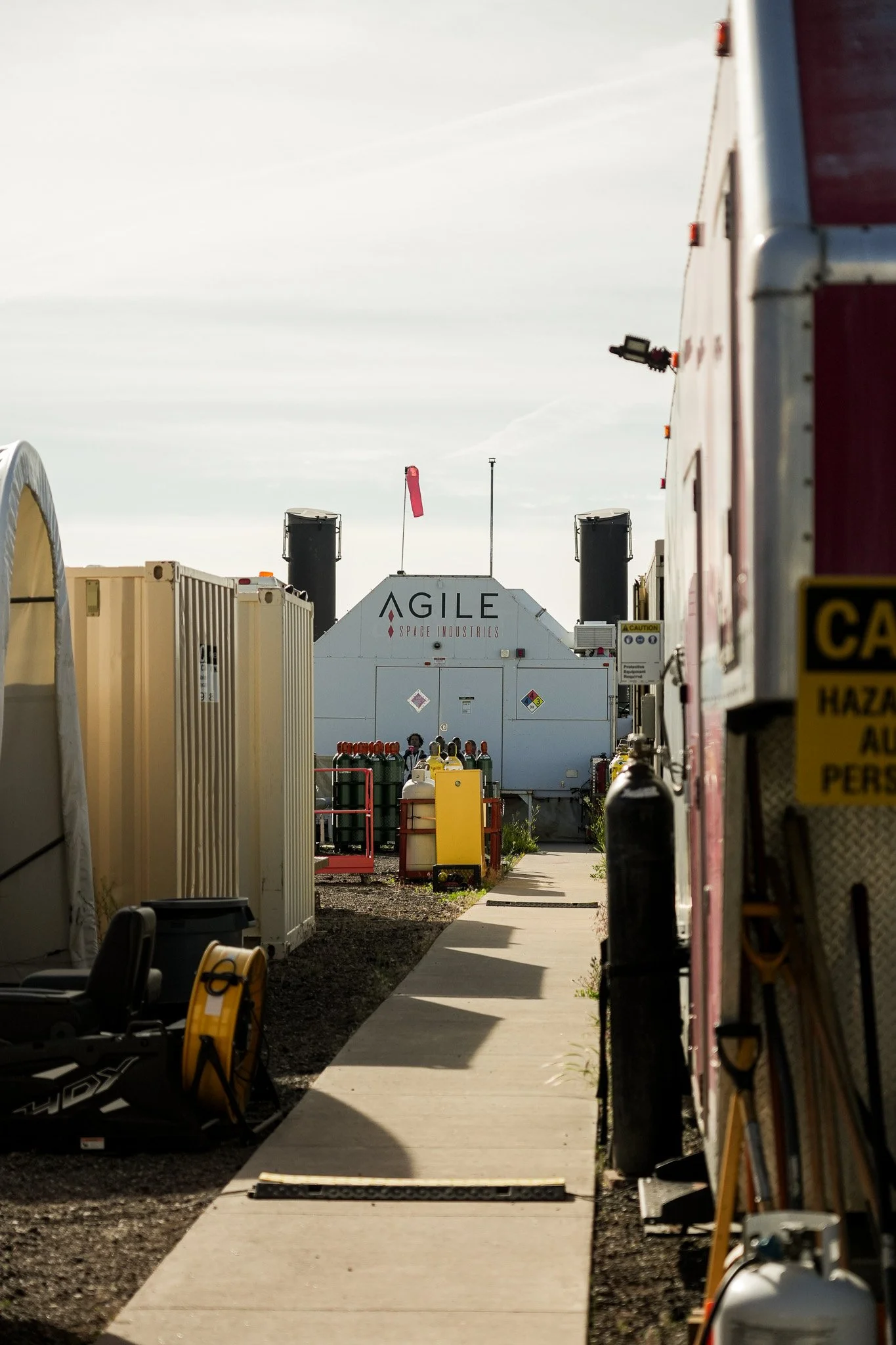
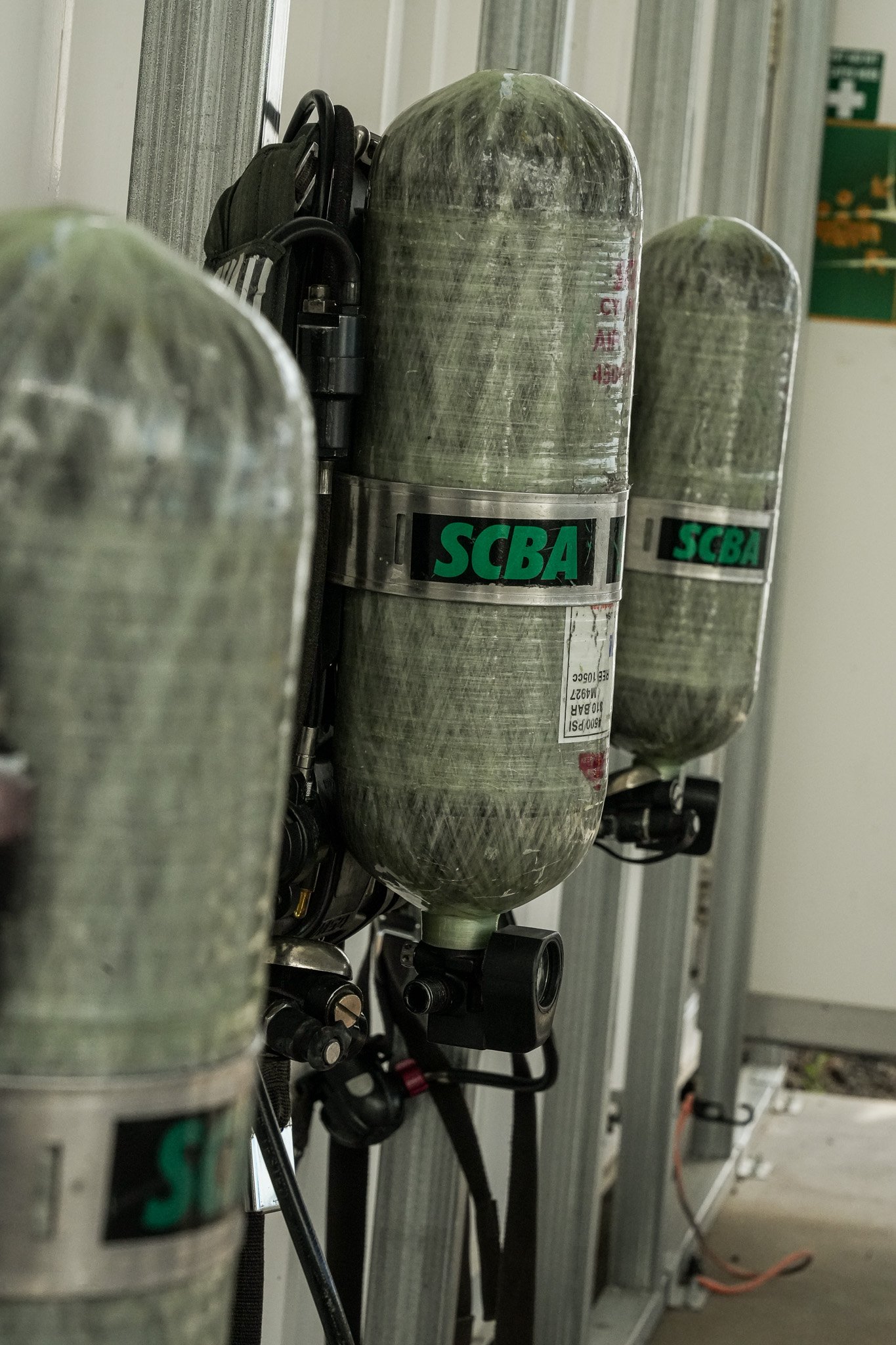
The work extends well beyond engineering at a computer or in CAD. It can mean working outside in the elements, building and modifying components, operating machinery, troubleshooting hardware, and supporting hot-fire operations.
“You can come in with a plan for the day, and then something happens that changes that plan,” Sue said. “You have to be flexible and willing to jump in wherever you’re needed.”
Payton has spent much of his time supporting upgrades to Agile’s Animas test stand. Working directly with the hardware as systems are built, modified, and integrated has given him a deeper understanding of not only how individual components function, but how they come together as part of a larger test operation.
That day-to-day exposure is an important part of their year in Durango. Working alongside the test team through hardware updates, safety considerations, thruster turnovers, and active test operations gives Sue and Payton both technical experience and firsthand insight into troubleshooting, coordination, and decision-making required to support fast-moving programs.
What You Can’t Learn from a Manual
Some of the most valuable lessons Sue and Payton are taking from Durango are the ones that can’t be fully captured in a procedure.
“A manual can tell you how something is supposed to work, but it can’t show you every way it can go wrong,” Sue said.
Learning to recognize when something isn’t behaving as expected, trace the problem, and determine what to do next comes through experience. Just as important is working alongside people who have encountered those situations before.
Sue has particularly valued the Durango team’s willingness to explain not only how something is done, but why. That transfer of knowledge gives her a deeper understanding of the reasoning behind the systems and processes she’ll eventually help operate in Tulsa.
Payton has found that the learning extends well beyond the hardware. A recent discussion about coordinating propellants and other consumable supplies reinforced how much work happens behind the scenes to keep a test operation running and ready to meet demand.
Those lessons are difficult to replicate in a classroom or capture in a manual. They are also part of why Agile is taking an intentional approach to building the STC team: standing up a new testing capability means developing not only the hardware and systems, but also the people and operational knowledge needed to run it.
Taking Durango Experience to Tulsa
Tulsa will have its own systems, requirements, and challenges. The goal isn’t to recreate Durango. It is to take the knowledge built through years of testing there and use it as a foundation for STC’s own operations.
For Sue, that means developing a deeper understanding of the systems behind the procedures.
“When I go back to Tulsa, I don’t want to only know which button to push or which procedure to follow,” she said. “I want to understand what’s happening behind it and why.”
She also wants to carry forward the approach she has seen from the Durango team: attention to detail, a strong safety culture, a willingness to troubleshoot, and an understanding of the role each person plays in a successful test.
Payton’s work on the Animas upgrades has given him another perspective. Being involved as systems are modified and integrated has helped him see how individual pieces fit within the architecture of a larger test stand — knowledge he expects to draw on as STC is assembled and commissioned.
The Opportunity to Build Something New
There is an important difference between joining an operation that has been running for years and helping establish one from the beginning. Sue and Payton are our pioneers in Oklahoma.
Payton has already seen the value of being involved as systems are built and integrated through his work on Agile’s Animas test stand. At STC, he’ll take that experience further as part of the team helping assemble, commission, and operate a new testing capability.
For Sue, the challenge and the opportunity are closely connected.
“The exciting part and the challenging part are almost the same thing: we’re building it,” she said.
The work happening now is laying the foundation for how STC will operate well into the future, from its systems and processes to the operational knowledge that will support the team as it grows.
“There aren’t many times in your career when you get to say, ‘I was there when we built this.’”
A Career Built Around Solving Problems
Sue and Payton’s experience also offers a look at a side of engineering that can be difficult to capture in a job description. Test engineering requires technical knowledge, but it also calls for curiosity, adaptability, and a willingness to work through problems when the answer isn’t immediately obvious.
“You also need to be comfortable not knowing everything,” Sue said. “Being curious, asking questions, and being willing to learn from the people around you are probably just as important as knowing the equations.”
For Payton, that uncertainty is part of what makes the work interesting. Testing is about understanding what works, identifying what doesn’t, and figuring out what comes next.
And there are some signs that you’ve fully embraced the test engineer mindset.
For Sue, it’s when “you get excited about a successful leak check.”
Payton takes it a step further: “You know you’ve become a test engineer when you expect everything to break, celebrate when it doesn’t, and immediately start wondering what you forgot to test.”
As construction progresses, Sue and Payton continue to build the experience they’ll bring back as members of STC’s first operating team. Alongside colleagues in both locations, they are helping carry Agile’s established testing knowledge forward as STC prepares for operations.
Interested in building what’s next?
At Agile, engineers work hands-on to design, build, and test propulsion technologies that enable spacecraft to move, maneuver, and operate in space. Explore career opportunities at Agile and see where you could make an impact.
